
How to Search the Lincoln Court Docket
Pull out the citation first. The court notice or any other case paper works too. What matters most is the Lincoln court name and the case number printed on it. The address where the incident happened matters less. A city ordinance complaint may land in Lancaster County Court. A felony past its preliminary stage belongs in District Court. Nebraska's official JUSTICE one-time search covers county and district case information statewide. It is a paid, limited service rather than a city-run case register.
Search with a party who is truly part of the Lincoln case. The system accepts a last name alone. A fuller form works better. Try Last Name, First Name, M, Suffix when you know it. Adding Lancaster County, the year, and the court type narrows a broad result. The case type or subtype narrows it further. Skip those details. A Lincoln docket search can return the wrong court, or none at all.
- Read the citation or notice for the court, case number, and whether the matter is a court case or a city administrative notice.
- Search JUSTICE by an involved party, then narrow with Lancaster County and the available year and type fields.
- Open the case summary and Register of Actions, the chronological list of filings, settings, orders, costs, and other recorded events.
- For a hearing date, check the state calendar and the applicable Lancaster calendar, then verify any recent change with the clerk.
- Ask the appropriate clerk for a document or certified copy when the public result does not include the needed filing.
Note: a brand-new Lancaster case can take about 24 hours to show up in the searchable system, so a just-filed Lincoln matter may not appear right away.
Lincoln Court Case Search in JUSTICE
JUSTICE searches Lincoln and statewide trial-court cases. Lincoln works best as a county filter rather than its own database. The one-time name search currently costs $17. It returns up to 30 cases and keeps results open for three calendar days. You still pay even when nothing comes back. A subscriber route offers more search criteria. No route removes the need to pin down the right Lancaster court for a Lincoln case.
A result may list the case number, court, case type and subtype, and parties. It can also show the judge, filing date, status or disposition, financial information, and the Register of Actions. Document images filed after April 16, 2008 may be available if nonconfidential. Think of the case summary as the high-level record. The Register of Actions is the event-by-event record. A docket call is a scheduled group of cases, not another name for the register.
| Lincoln search detail | Why it matters |
|---|---|
| County and court type | Separates County Court from a Lincoln District Court record when location alone is not enough. |
| Case year and type | Helps narrow a common party name and identifies the court record category. |
| Case number | Is the best identifier for a clerk, calendar check, payment route, or document request. |
Type the number exactly as displayed instead of reconstructing a prefix from memory. Two Lincoln cases can carry different court and case-type labels even though both arose in the city.
The Lincoln Municipal Court
People search the phrase "Lincoln Municipal Court." Lincoln offers no separate municipal-court docket, calendar, or city-court payment portal. Treat the city label as a label only. Lincoln City Attorney staff do prosecute traffic and misdemeanor violations of the Lincoln Municipal Code. Tickets may come from Lincoln Police or UNL Police. Prosecuting a case, though, is not the same as keeping a public court register.
Nebraska law lets a city or village attorney sign and prosecute a complaint in County Court. That applies to a filed Lincoln ordinance matter. The Nebraska County Court overview lists municipal ordinance violations among County Court business. That is why a Lincoln code complaint turns up as a Lancaster County Court case. It does not come through a city portal.
The Lincoln court structure reaches well beyond ordinance cases. County Court covers misdemeanor, traffic, small claims, probate, adoption, and felony preliminary proceedings. District Court handles felony trials plus major civil, domestic-relations, paternity, and equity matters. Lincoln also has its own Juvenile Court with separate record rules. An adult-court search is never the whole picture.
Lincoln Municipal Docket Portal Gap
Lincoln's official city pages describe a City Attorney office and an administrative parking-citation process, not a public court register. That gap is a routing point, nothing more. It does not mean the city tracks nothing internally. A Lincoln city web page gives no answer. It will not tell you whether a court complaint was filed, dismissed, set for hearing, or resolved.
Lincoln's City Attorney office explains its prosecution role and lists publicrecordsrequest@lincoln.ne.gov for public-record requests aimed at that office's own records. Such a request cannot replace a County Court Register of Actions or a District Court file. For an actual Lincoln court case, keep the court number handy. Send the request to the court clerk who holds the record.
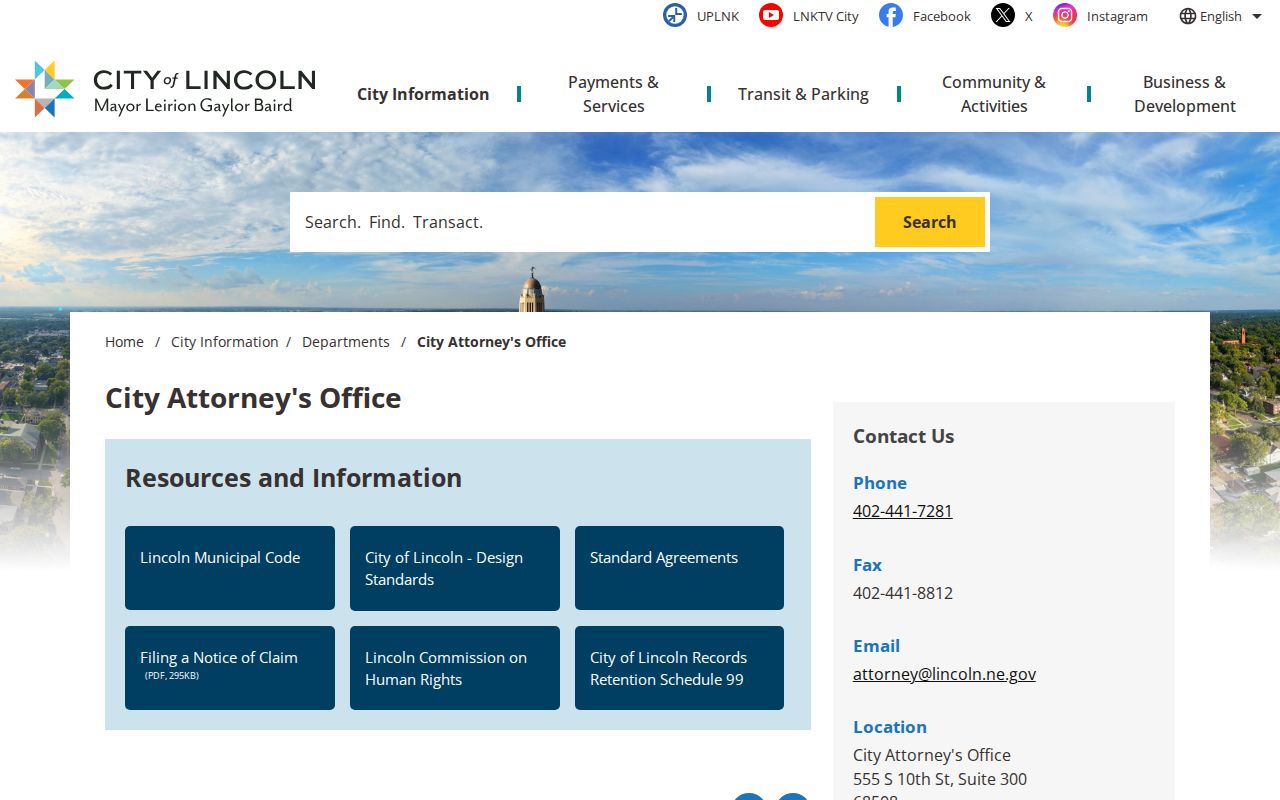
The City Attorney pages help separate municipal prosecution details from the Lincoln court record itself, which sits in the state-court system.
Lincoln Court Dates and Settings
A setting is a scheduled court appearance. It is not automatically a trial date. Calendars shift when a case is continued or reset. So treat any listed court date as tentative until the clerk confirms it. For settings, the state offers the Nebraska multi-court calendar. You can search it by current or future date. You can also search by last name. Its own warning is worth heeding: a missing result does not prove there is no hearing.
That statewide display does not fully cover Lancaster District Court. A Lincoln District Court case calls for the local judge and room PDFs. Those are posted on the Lancaster Court Calendars page. If a court date looks stale, ask the District Court clerk whether anything changed recently. The newest Register of Actions entry beats an older calendar sheet. So does word straight from the clerk.
| Date | The day recorded for the Lincoln case setting; confirm it after a reset or continuance. |
|---|---|
| Time | The stated appearance time or docket-call time, which can differ from an individual hearing time. |
| Courtroom | The courtroom or location shown by the calendar or clerk for the assigned Lancaster court. |
| Judge | The judicial officer listed for the setting, if available in the calendar or case summary. |
| Setting Type | The scheduled event, such as arraignment, pretrial, hearing, docket call, or trial. |
Lincoln Court Buildings: 555 and 575
Two Lincoln addresses sit a block apart. Mix them up, and records requests go to the wrong office. At 575 South 10th Street, the Justice and Law Enforcement Center houses the state courts. County Court sits on the second floor. District Court and its clerk office sit on the third. The separate Juvenile Court sits on the fourth. The County/City Building at 555 South 10th Street holds other government offices. Those include the separate City Attorney office.
The distinction matters. The court clerk holds the court file. A Lincoln city office that investigated or prosecuted a matter is not automatically the keeper of the record. When the District Court Clerk's records request form asks for a case type, year, parties, and the exact document, it is routing your Lincoln case to the right file. County Court copies go through the County Court division. A Lincoln address on a citation changes nothing here. It does not change which clerk is responsible for the final court record.
For local-government context in Lincoln, the Lancaster County government listing is the place to look.
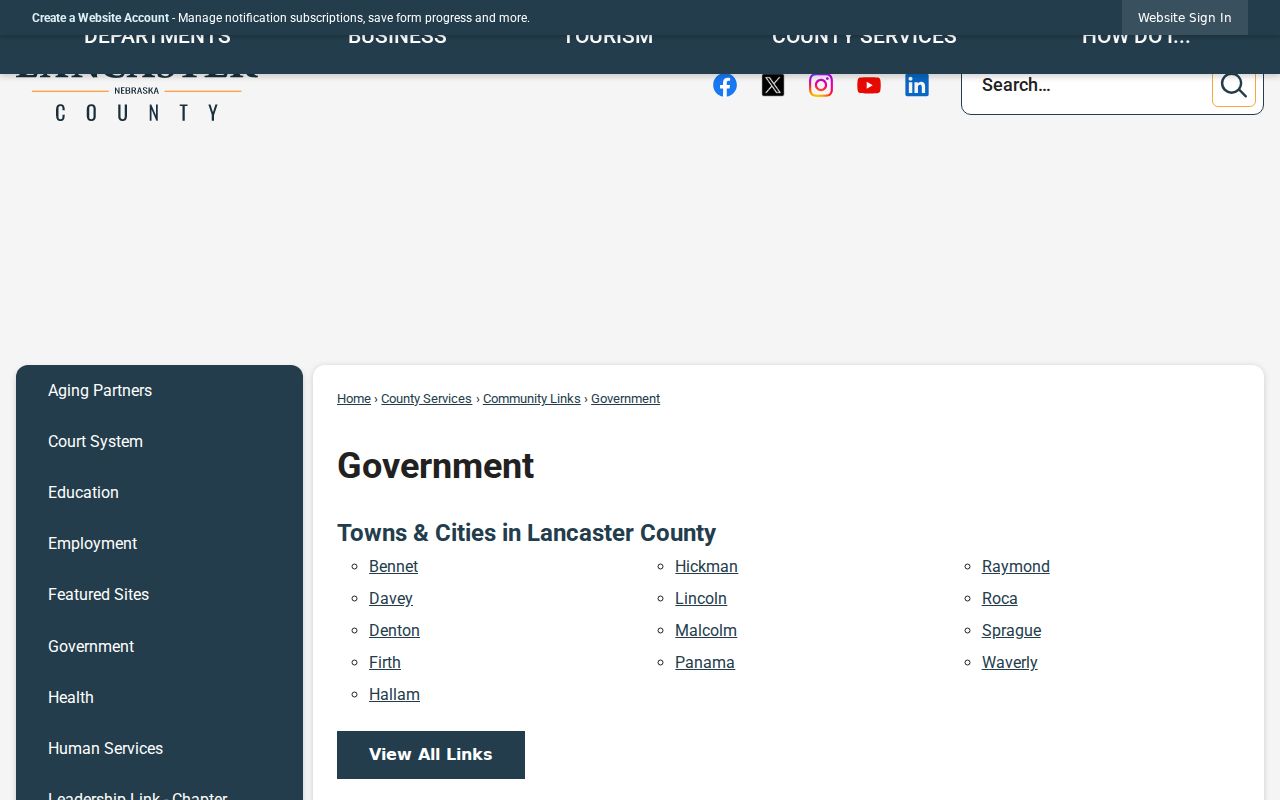
A government listing gives you names and offices. The courthouse and clerk route still decide where a Lincoln court record actually lives.
Lincoln Traffic Tickets
Start by figuring out what kind of Lincoln citation you hold. A state traffic case comes with a County Court number. That number puts it in the court system. Call the County Court criminal and traffic desk at 402-441-8959 if you are unsure. Nebraska's official payment path asks for the county, court choice, and case type. It also wants a two-digit year and case number. Copy those fields straight from the notice. Do not assume a Lincoln police contact means a city-only docket.
Waiver rules come from the citation itself. If the instructions permit it, you can waive appearance. Pay through the approved route. If not, or if you contest the ticket, the appearance date controls everything. Either way, the County Court register remains the record of the case and its settings. Need the broader court-payment and hearing process? See the countywide Lancaster County traffic court records reference.
Lincoln's Traffic Unit explains enforcement, but it is not the court's case search. Enforcement details and a Register of Actions entry answer different questions about the same citation.
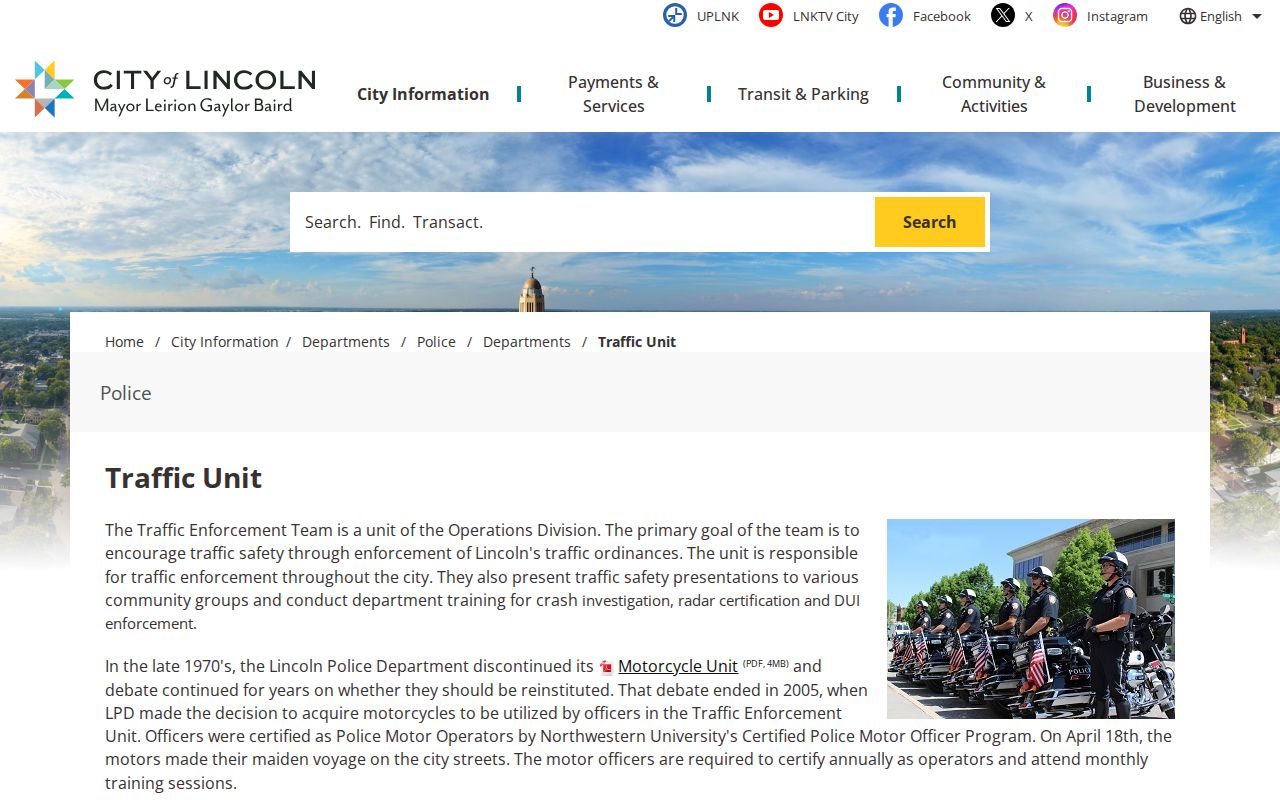
The Traffic Unit covers city enforcement. The court number on the citation is what steers a Lincoln traffic case to the right state-court record.
Note: A payment record shows financial activity only. It does not replace the current court register or a clerk's confirmation of the next setting.
Lincoln Parking Citations and Court Cases
Lincoln parking citations run through a separate civil and administrative process. The city offers online payment with a $2.70 fee. There is also a 14-day appeal window, an initial review, and an administrative hearing path. None of that creates a County Court criminal or traffic case. So before you search JUSTICE, read the paper carefully. Look for a state court number. Check whether you hold a parking citation or a court citation.
The Lincoln parking-citation page is the official route for that administrative process. A parking appeal follows the city notice and its deadline. A Lincoln state traffic or ordinance case runs differently. It gets routed by court name and case number. County Court, JUSTICE, or the state payment interface may apply, as the notice directs.
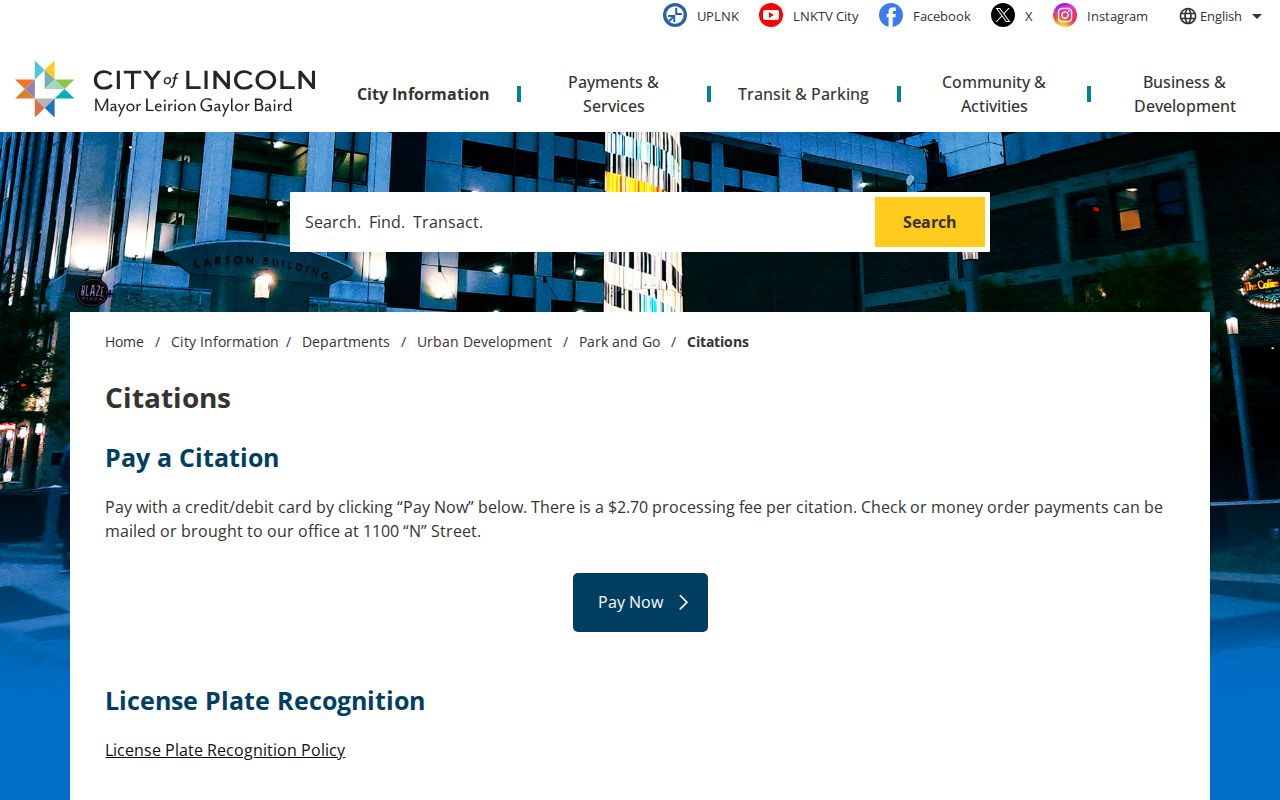
That is the trap: a Lincoln administrative citation is real, but it is not a court docket entry, and the two should never be confused.
Where Lincoln Cases End Up
Where does a Lincoln case land? It depends on what was filed. City ordinance complaints can be filed and prosecuted in County Court. The authority is Nebraska Revised Statute §25-2703. County Court also takes traffic, misdemeanors, small claims, probate, adoption, and felony preliminary proceedings. Felony trials and larger civil matters move up to District Court. The separate Juvenile Court keeps its own category of records.
Docket flow: Lincoln city-code or citation notice → Lancaster County Court or administrative city process → Lancaster County District Court when the case type or stage requires it.
This routing is an aid, not a prediction for any one case. Read the court identification on the filing, check the Register of Actions for recorded events, and ask the clerk when unsure. One Lincoln name does not merge County Court, District Court, and city administrative records into a single docket.
Lincoln Court Population and Docket Scale
Lincoln is the county seat and its largest incorporated place. Not surprisingly, many Lancaster court questions trace back to a Lincoln address or event location.
Lincoln's size explains why so many court searches start there. But the official 2020 incorporated-place table does not create a separate city court system.
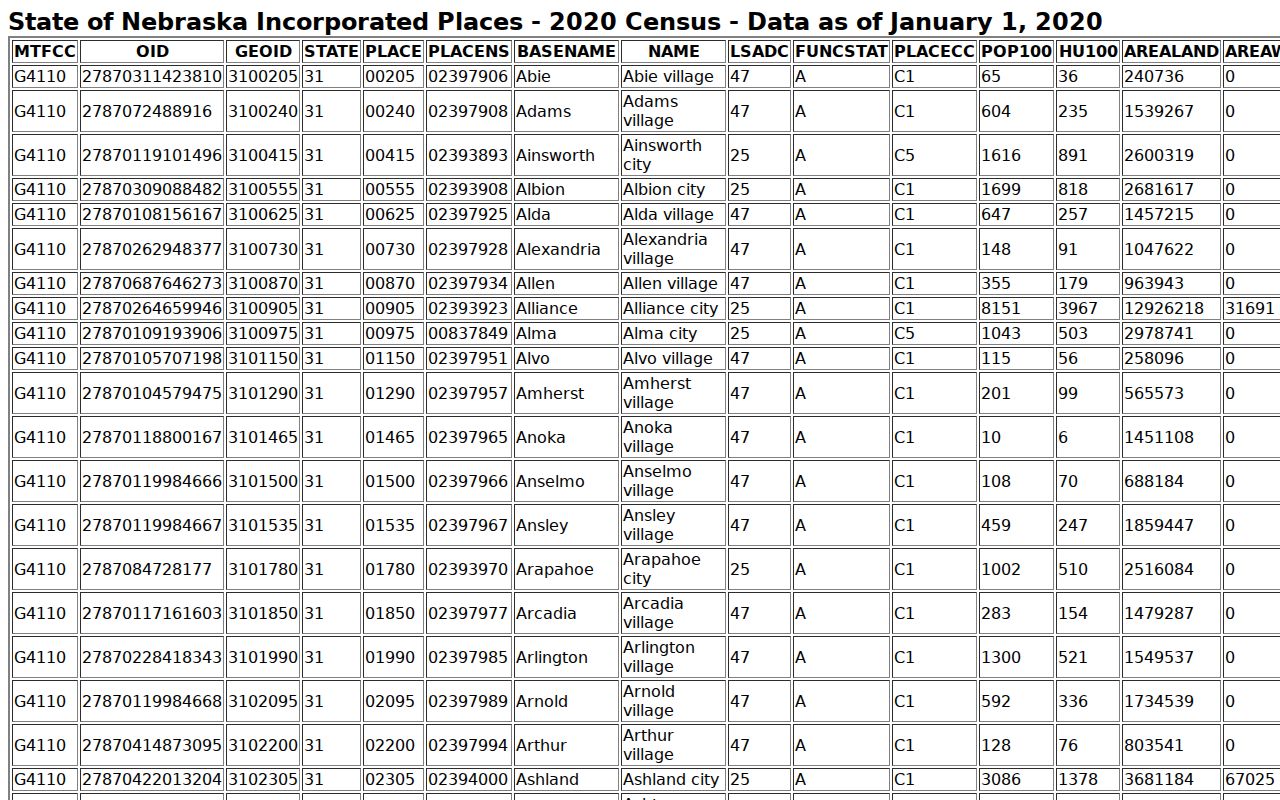
The Census table supplies population context for Lincoln. It identifies no separate municipal court docket, because none exists.
Public Access to Lincoln Court Records
Can you see a Lincoln court record online? It comes down to the file type and the access rule, not the city label. Nebraska treats several electronic fields as public: party indexes, case summaries, Registers of Actions, calendars, judgments, orders, decrees, and any images the court has made available. Exceptions apply. Some material sits at a clerk public terminal or comes out only through a specific request, even when remote copying is off the table.
For a District Court file, start with the District Court Clerk records request. Give the case number, case year, parties, case type, and the exact document you need. The form covers civil, criminal, and juvenile matters. It also asks whether you want a certified copy. County Court copies go through County Court staff instead. One caution: the City Attorney public-record email is not the court's document register, so do not treat it as one.
Public access rules:
Nebraska court-records Article 8 identifies public electronic fields, including Registers of Actions and calendars, while preserving exceptions.
Nebraska Supreme Court Rule §2-215 permits inspection of public electronic records at a clerk terminal or designated location.
Nebraska Revised Statute §84-712 provides a public-record inspection and copying framework subject to statutory limits.
Sealed, restricted, redacted, and juvenile court records each carry their own access limits. A missing public image proves nothing about whether a case exists. When the stakes are real, ask the court that maintains the Lincoln case for the signed order or a certified record.
Lincoln City Attorney and Court Records
A Lincoln City Attorney request and a court-record request run on parallel tracks. They are not interchangeable. The City Attorney office covers its own public records. It also handles questions about the Lincoln city prosecution process. County Court cases, citations, and copies belong with the County Court division. District Court files, identified orders, and certification go to the District Court Clerk. Whichever office you contact, hand over the right details. Give the court number, the year, the parties, and the document name. Those details route a Lincoln request into the right record system fast.
The clerk's search policy also explains why vague requests stall. Clerks can search specified records when you give complete identifiers. They then hand you photocopies or certified copies of what they locate. They will not issue a general certificate saying no record exists. That limit matters most in one situation. You know something happened in Lincoln. But you have not pinned down the court or the case number.
Hold on to the original notice. Use its court label. Preserve the exact case number you found in JUSTICE. With those basics in hand, the city, County Court, and District Court routes separate cleanly.