
How to Search Civil Dockets
Start with JUSTICE. It is the statewide trial-court case system and the usual online gateway to a Lancaster County civil docket. Its public one-time name search lets you narrow by county, court, year, and type. A party name may surface a possible case. A case number plus the right court choice cuts down false matches. A JUSTICE entry can include a case summary, parties, filing date, judge, attorneys, and status. It may also list financial entries, the Register of Actions, and public images where available.
Have a clerk fallback too. County Court civil and small-claims questions go to 402-441-7271. District Court civil files and specific documents work through the District Court Clerk's official request form. You can also call the records line at 402-441-7328, or stop at the clerk counter itself. Nebraska rules also allow public terminals at the courthouse. That applies when remote display of public court information is limited.
- Identify the likely Lancaster County court and civil case category before searching.
- Search JUSTICE with a party name or known case number, then limit it by Lancaster County, year, and type.
- Open the matching case and read the Register of Actions from the filing date forward.
- Use the listed status, judgment, order, or satisfaction entry to check the current posture.
- Request a precise document from the appropriate clerk when an image is missing or an official copy is required.
Lancaster Civil Docket Court Boundary
Court name matters as a search field in Lancaster County. County Court shares civil jurisdiction with District Court up through $70,000. It also handles several defined case groups. District Court takes the major civil and equity matters, plus domestic relations and paternity. The Nebraska County Court overview and the local Lancaster District Court page show that split clearly before any docket search begins.
| Case category | Lancaster docket to start with | Why the court choice matters |
|---|---|---|
| Civil case within the County Court limit | County Court | County Court and District Court have concurrent jurisdiction through $70,000. |
| Small claims, probate, guardianship, conservatorship, or adoption | County Court | These categories are maintained within the County Court structure. |
| Major civil, equity, domestic relations, or paternity | District Court | District Court keeps these Lancaster County records. |
| Juvenile case | Separate Juvenile Court | A different court and public-access framework apply. |
Note: Treat the $70,000 figure as a jurisdictional guide only. Always check the court actually shown on a filed Lancaster County case.
What a Civil Docket Shows
Think of a Lancaster County civil docket as a chronology, not the whole case file. It opens with a caption and the parties. From there it records the filing or opening date, the judge, attorneys, status, court settings, and any financial costs or payments, all inside the Register of Actions. Public images may be linked when available. A plain entry usually just tells you something was filed or scheduled; the order or document behind it carries the fuller text when that text is public.
| Caption and parties | The case title and the plaintiff, petitioner, defendant, or respondent named in the Lancaster County civil file. |
|---|---|
| Filing date | The date the civil case opened, which helps separate same-name results. |
| Judge and attorneys | The court officer and representatives listed in the case information. |
| Register of Actions | The date-ordered list of filings, service, settings, orders, payments, and later activity. |
| Status or disposition | The docketed case posture, which should be read with any judgment or order. |
| Financial entries | Costs, payments, execution, or satisfaction activity when included in the public case detail. |
Not every document appears as an online image. The Lancaster District Court Clerk records request form is the local route for those. It requests records; it does not replace the docket register.
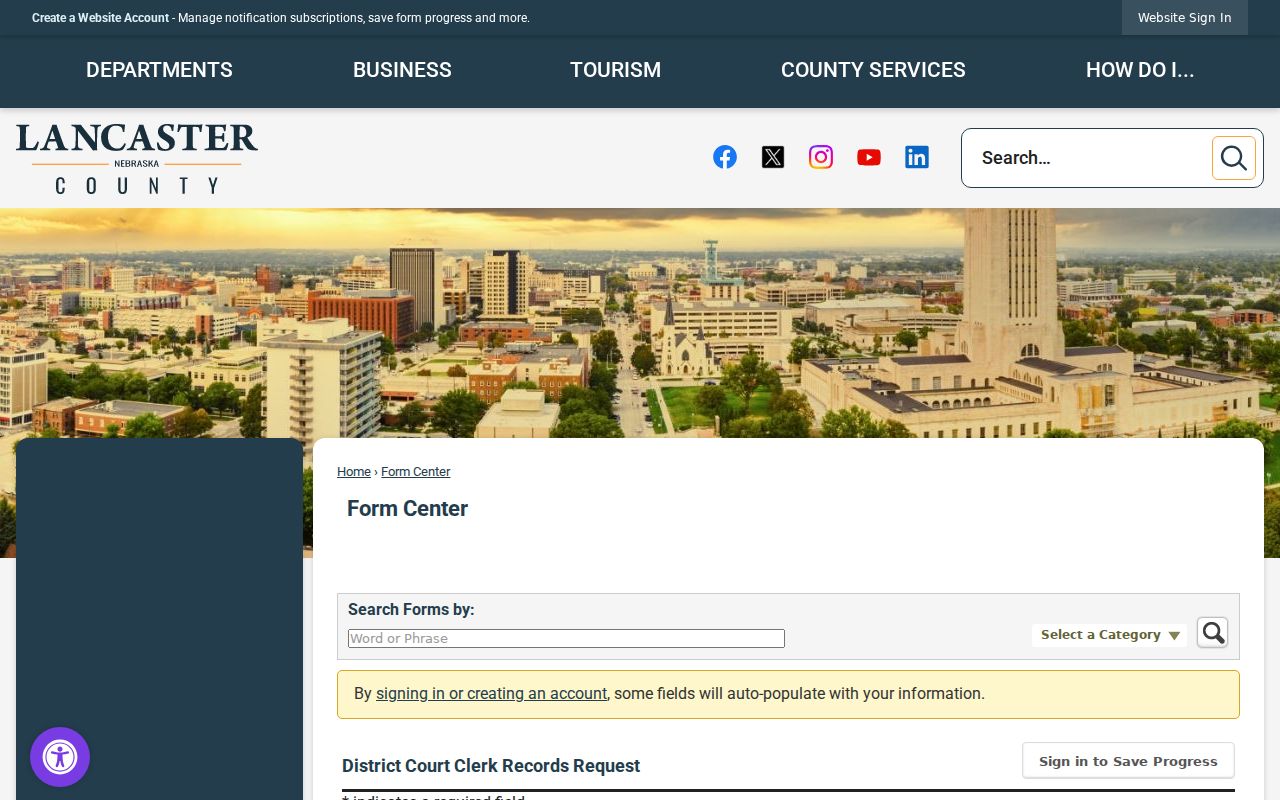
Using the form, a Lancaster County requester names the exact civil document, picks a delivery method, and states whether certification is needed. That beats hunting for an undirected file.
Lancaster Civil Docket Date Order
Follow a Lancaster County civil case by reading the Register of Actions top to bottom, in date order. A register may show a complaint or petition, service or return, an answer, a motion, a scheduling event, a judgment or order, execution, and satisfaction. A case marked closed can reappear later. The later entries often explain why. An execution or satisfaction entry is not a new lawsuit. It concerns enforcement or completion after the judgment.
Remember the docket is an index and a history. A complaint's filing date proves nothing about its allegations. A motion entry only shows that a motion reached the court. To learn whether the court acted, review the public order, judgment, or later disposition entry. If the result stays unclear, identify the document and its date before asking the clerk for it.
Types of Civil Cases on the Docket
Civil records in Lancaster County are not one undifferentiated search category. County Court can hold ordinary civil cases within its concurrent limit, small claims, probate, guardianship, conservatorship, and adoption matters. District Court's docket carries the major civil and equity cases along with domestic relations and paternity. The case type often determines both which office keeps the record and which public limits apply to individual documents.
- Complaint or petition
- The filing that opens a civil case or asks the court for relief.
- Service
- A docket event showing delivery or return activity for the initiating papers.
- Execution
- A post-judgment enforcement entry that can appear after a case is otherwise resolved.
- Satisfaction
- An entry showing that an obligation or judgment has been satisfied when the record so states.
Pick the type before searching: County Court civil, small claims, probate, adoption, District Court civil, domestic relations, or paternity. That choice makes any Lancaster County result easier to evaluate. A Juvenile Court file sits in a separate local record system, so don't assume it will appear with ordinary civil results.
Lancaster Civil Docket Motions
A filed motion is not a ruling. In a Lancaster County civil case, the Register of Actions may list the motion, a response, a hearing date, and eventually an order, and each is a distinct docket event. Reading the first entry as the result can flip the meaning of the case, especially when the motion was denied, withdrawn, continued, or never decided the way a reader expects.
Read the next event. For a motion on a Lancaster County civil docket, look for the later order, judgment, minute entry, or disposition rather than stopping at the filing line.
For a setting, the case record may list a date, time, courtroom, and event type. A scheduled hearing only tells you the court set aside time. It says nothing about what the court will decide. The hearing may have moved. If so, the current Register of Actions beats an old calendar printout every time.
Settings and Hearings on Civil Dockets
Lancaster County civil settings show up in the case history. The state's multi-court calendar is another official channel. The state tool lets you pick County Court or District Court. District Court coverage for Lancaster is spotty there, though. So a blank result is not proof that no hearing exists. The state calendar may come back empty for a District Court setting. Then pull the local judge and referee calendar PDFs or call the clerk.
A solid setting check reads several fields at once. Use the case number, the court, the judge or courtroom, the date, the time, and the event label together. A continuance or reset can land in the Register of Actions before any general calendar catches up. That timing gap is exactly why the civil docket and a clerk's confirmation work best as paired Lancaster County channels.
Lancaster Civil Docket Record Requests
Missing a Lancaster County civil image? The District Court record request form covers that. Mark it Civil and give the clerk enough detail to find the right file. Six identifiers do the most work. They cover case year and case number. Plaintiff or petitioner, defendant or respondent, and a description of the document or order also count, as does any extra detail like a filing date. The form also wants your name, phone, email, a delivery choice, and a certification choice.
Copies come by email or on paper, certified or not. The clerk answers within two business days. Paper runs $.25 per page plus possible postage, and a certified email packet starts at $1.00. Those are request charges only. They do not freeze every court cost into the docket description. For live filing fees and court costs, the current Nebraska fee schedule is the official word. It takes effect July 1, 2026. The statewide Judicial Branch fee-schedule page shows those charges. Its effective dates make it worth a fresh look at filing or request time.
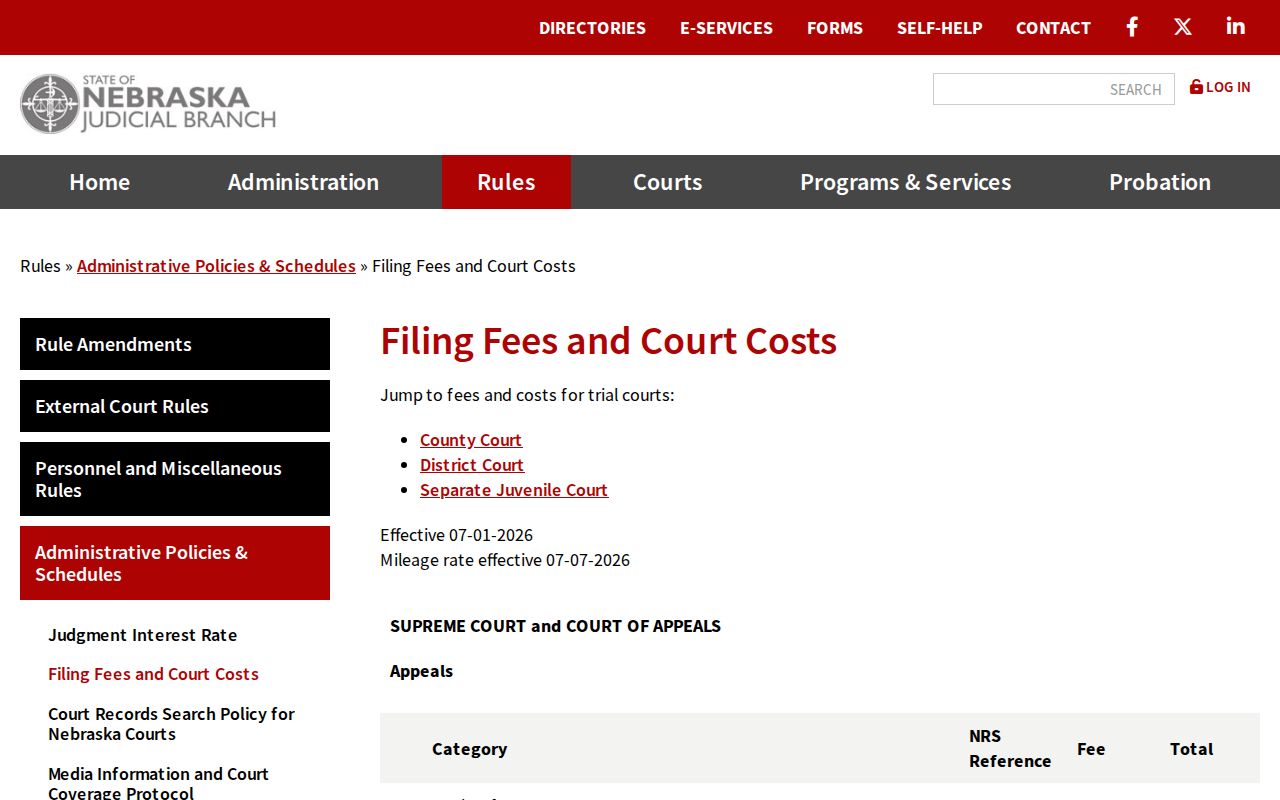
A plain docket printout and a certified court copy do different jobs. Any Lancaster County record request should say which one you need.
Public Access to Civil Dockets
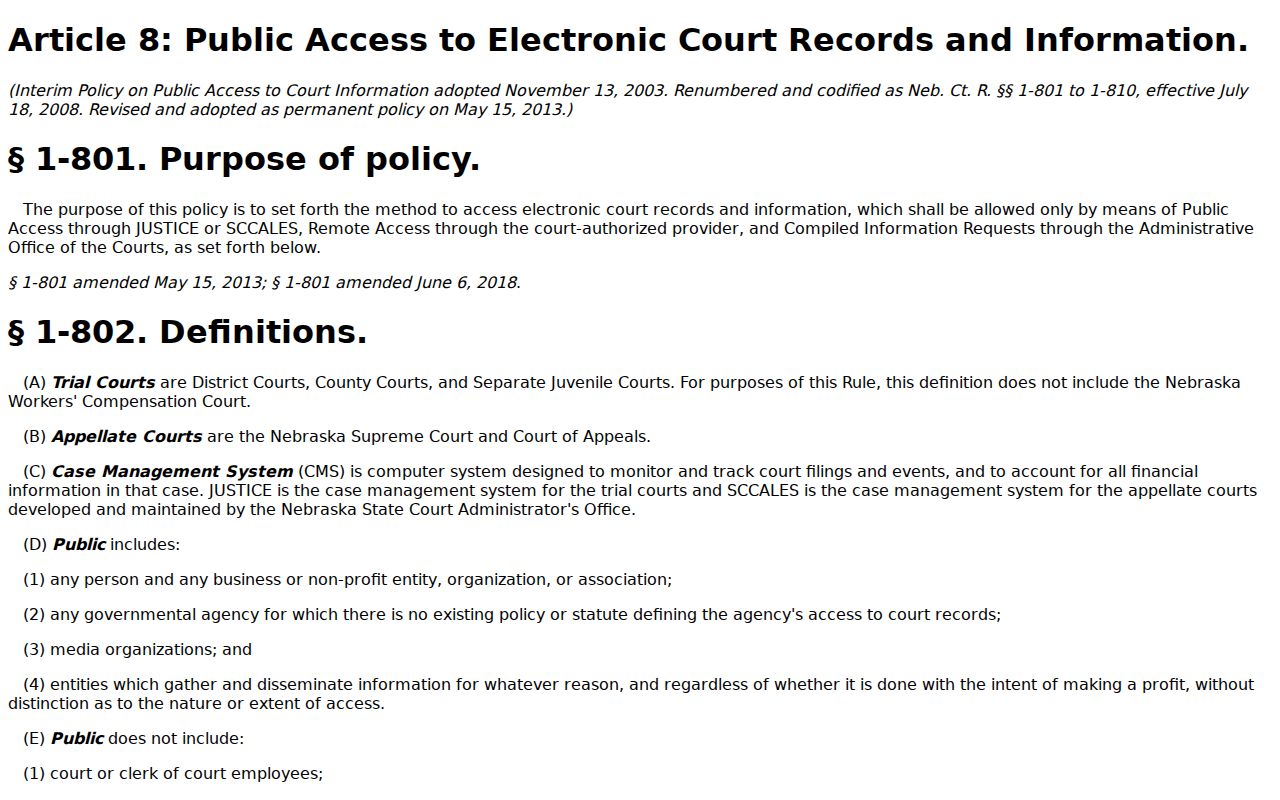
Nebraska court rules govern public access to a Lancaster County civil docket. They also set limits on specific records. Under Article 8, party indexes, summary information, Registers of Actions, calendars, judgments, orders, and decrees count as public electronic information. Some exceptions apply. Nonconfidential images may sit in JUSTICE. The clerk counter and a public terminal still matter as alternatives. So does a targeted paper or email request.
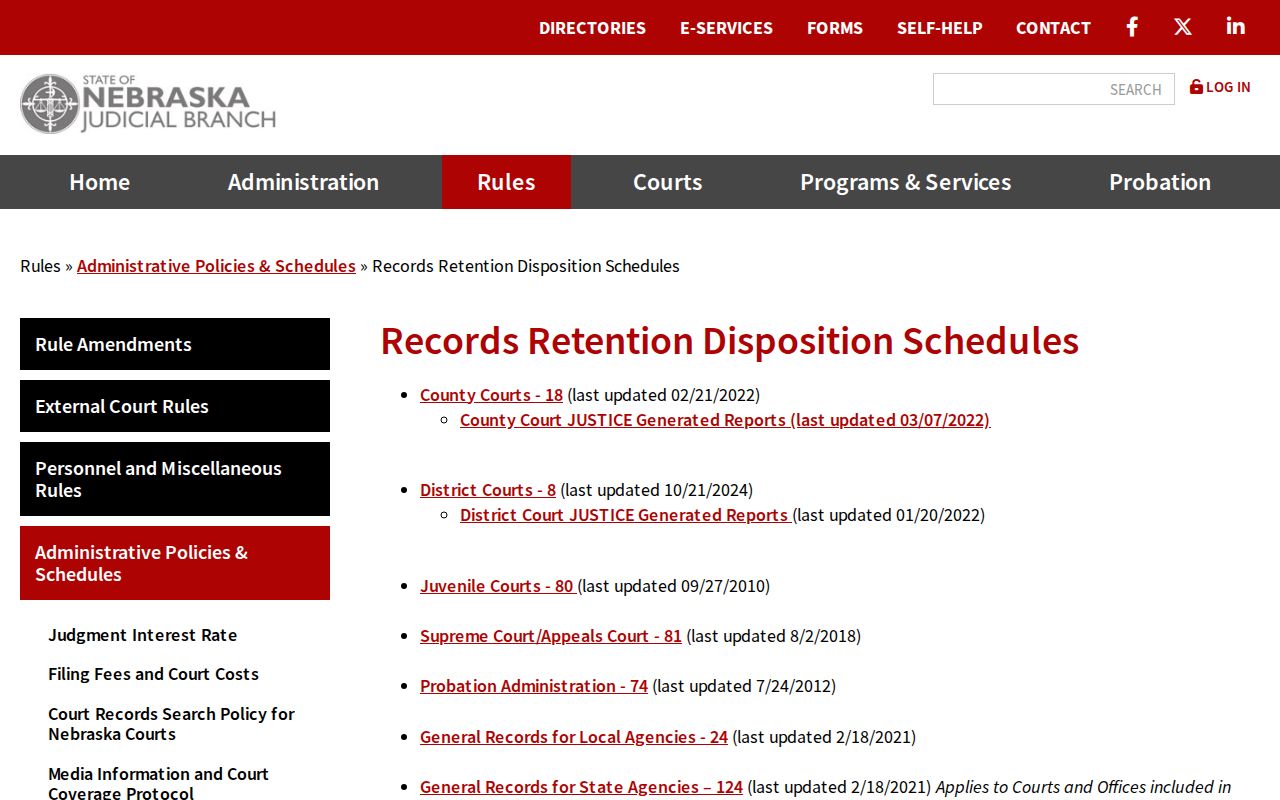
Why can an index outlive an image? The Nebraska records-retention schedules answer that. District Schedule 8 makes the general index and Register of Actions permanent in JUSTICE, microfilm, or archives. So when an old image is missing, ask the Lancaster County clerk or archives. Do not assume the civil case never existed. The statewide retention index shows the preservation rules. Those rules keep a register searchable even after an older paper image never makes it online.
A Lancaster County docket can be public. A record inside it may stay restricted or redacted. Public availability never authorizes releasing protected material.
The Nebraska public electronic-access rules set the statewide framework for which civil case fields the public can see. Court rules, orders, and restrictions can still wall off a particular document or personal detail. A clerk can point you to the public record route. Name a specific case or document in your request. Do not ask for an undirected case history. The rule draws the line the same way this page does. A case register can be visible to the public. The documents in the file are not.
Give the clerk a Lancaster County case number, the court, and a document description. That trio is the best start for locating a public civil record.
Lancaster Civil Docket Filing Systems
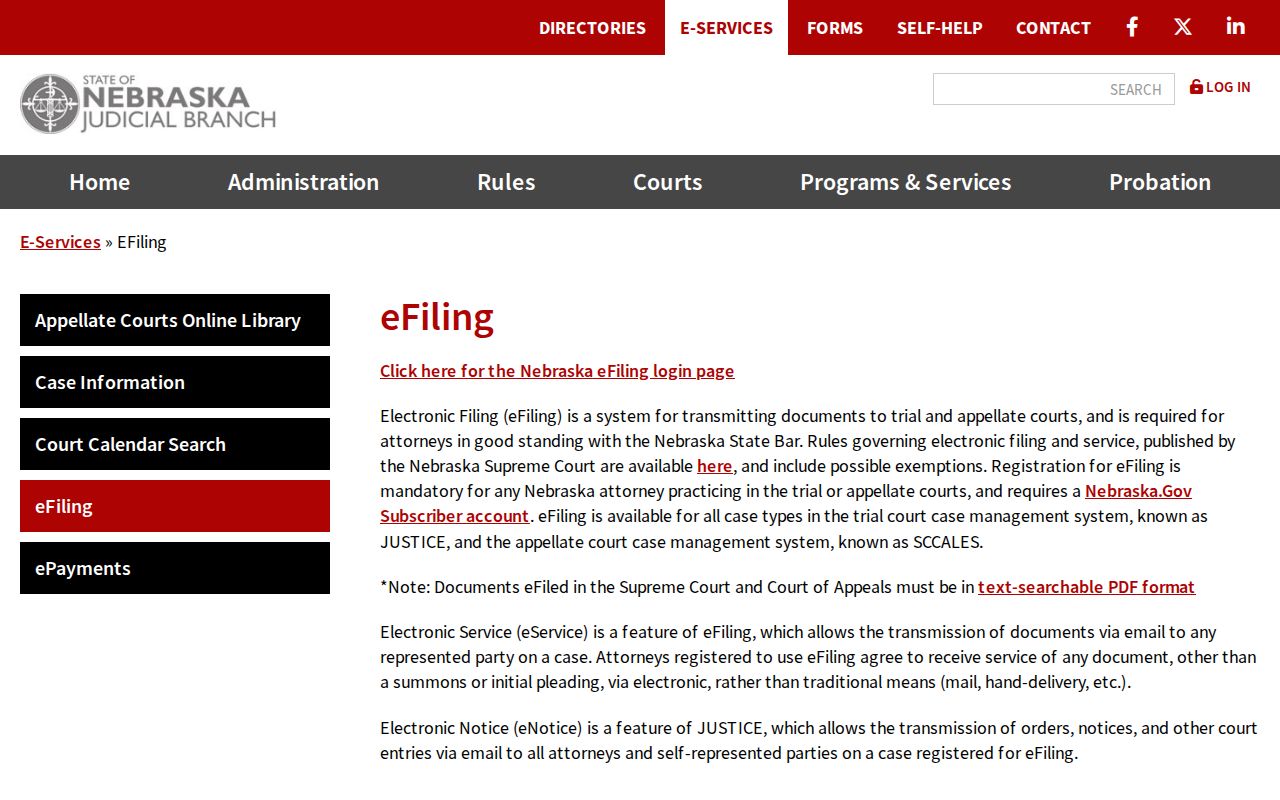
Nebraska.gov eFiling connects to the JUSTICE trial-court system, but filing access and public docket access are separate functions. The Nebraska eFiling service handles document submission plus eService and eNotice activity. Hunting a Lancaster County civil docket? Use JUSTICE or the clerk's record route. An eFiling login does not open the public register. The official eFiling description separates the electronic filing workflow from the public case-information and records-request paths.
For public information, the Register of Actions remains the Lancaster County civil docket's date-by-date case history.