
How to Search the Bennet Court Docket
Bennet offers no separate municipal docket, searchable register, calendar, or payment portal of its own. For a Bennet party whose case entered the state system, the dependable online route is the public JUSTICE one-time case search. Start with the actual party in the case. Then narrow by Lancaster County, year, court type, and case type if you know those details. A Bennet address helps as context. It is not a court selector. Treat it as background rather than a search term.
- Read the Bennet citation or court paper for the case number, court, year, and type.
- Enter the involved Bennet party’s complete name in JUSTICE and add Lancaster County.
- Narrow the Bennet result by County or District Court, case type, year, judge, or attorney when needed.
- Open the case summary and Register of Actions to identify the current court setting and status.
- Call the relevant clerk desk to confirm a Bennet setting or a record request before acting on older information.
Bennet Court Records Stay in County Geography
Bennet is an incorporated place inside Lancaster County, not its own county court system. The 2020 Census incorporated-place table puts the village at 1,082 residents. That local identity may explain a citation address. Yet the Bennet name never converts a County Court or District Court matter into a village docket. Identify the case type and the court first. Then a Bennet docket search makes sense. Bennet's official city site covers village government, including code questions.
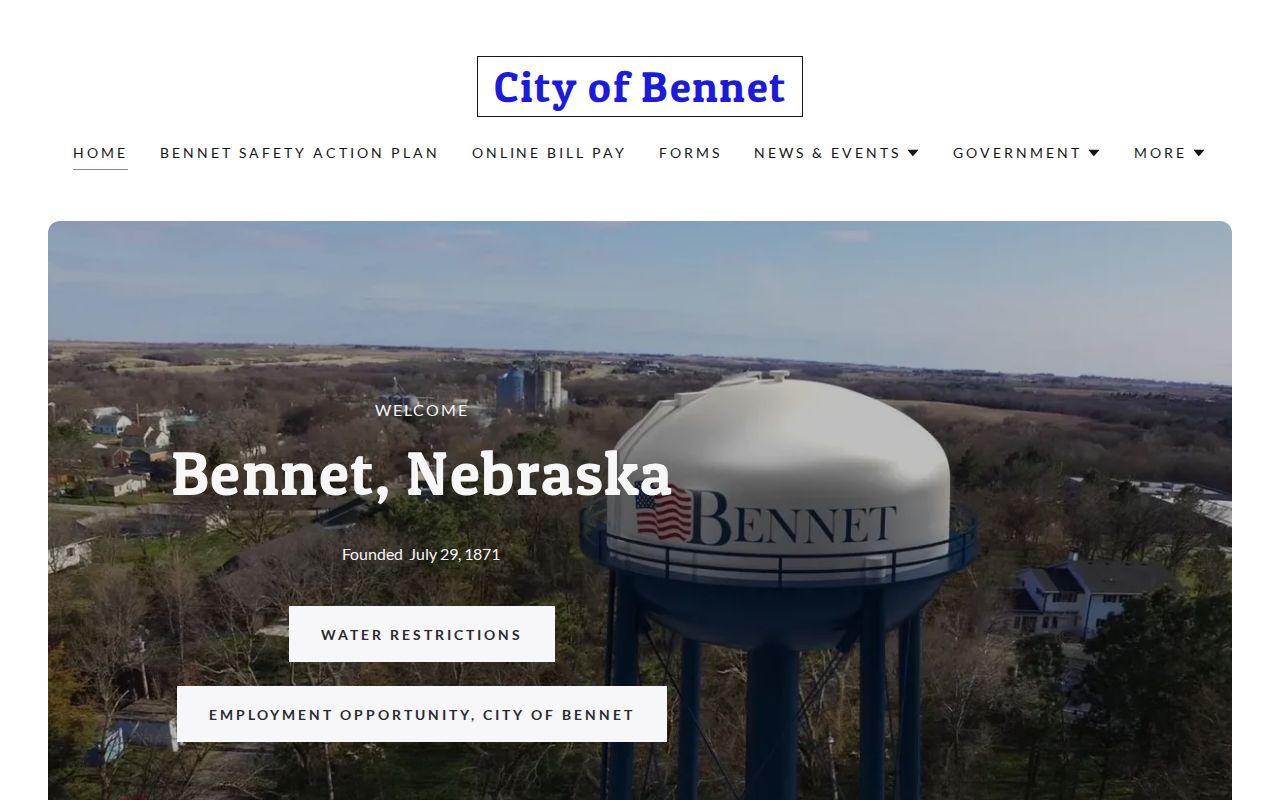
City Hall can answer local-government questions. The court named on the case controls where the actual court record lives.
The Bennet Municipal Court
The phrase “Bennet Municipal Court” names a court. It is not a place with its own courtroom or docket. Bennet itself posts a municipal-code library and a City Hall contact route. Those help with city-code questions. They publish no Bennet Register of Actions or show where a case sits. A city code says what conduct is prohibited. A court docket says whether a complaint was filed. It also shows what the court did about it.
The state's County Court overview lists municipal ordinance violations among County Court matters. So a Bennet complaint may turn into a court case. Then the county court docket is the dependable place to look. An assumed municipal docket is the weaker bet. Trust the county-level record over the name.
No Bennet Court Docket Portal Was Verified
Bennet's city pages give you a municipal-code library and a government contact route. They offer no public court register. Say that plainly. That gap does not turn every Bennet citation into a court case. Nor does it justify inventing a local portal. If a Bennet notice names Lancaster County Court, JUSTICE and the county clerk contact map are the documented next steps. If the question is administrative, start with the issuing office. Or follow the instructions printed on the notice.
Best fallback route: For a Bennet court question, start with the case type, the court on the citation, and the case number. Then use JUSTICE or the appropriate Lancaster clerk desk rather than searching for a village-only register.
Bennet Court Dates and Settings
A Bennet village meeting date is not a court setting. For a Bennet County Court matter, the Nebraska multi-court calendar allows date and last-name searches. The court clerk can confirm a recent change. The state calendar itself warns that entries may lag behind reality. No result does not mean no court date exists. When timing matters, check the current Register of Actions.
| Date | The Bennet-related court date in the calendar or Register of Actions. |
|---|---|
| Time | The listed time for the hearing or docket call, which may include several cases. |
| Courtroom | The Lancaster court location on the current case record, not a Bennet village meeting location. |
| Judge | The judicial officer listed for the Bennet case when that field is available. |
| Setting Type | The recorded event, such as arraignment, pretrial, hearing, trial, or compliance review. |
Bennet Code Is Not a Court Register
The Bennet municipal-code route leads to the village code library. That helps you find the ordinance language behind a Bennet inquiry. It cannot show a filing date, an appearance, a disposition, a payment, or a court order, because those are court-record fields. A Register of Actions is the chronological court list of filings and events in a case. The Bennet code text is something else entirely, so use the city source for ordinance research and the docket for case facts.
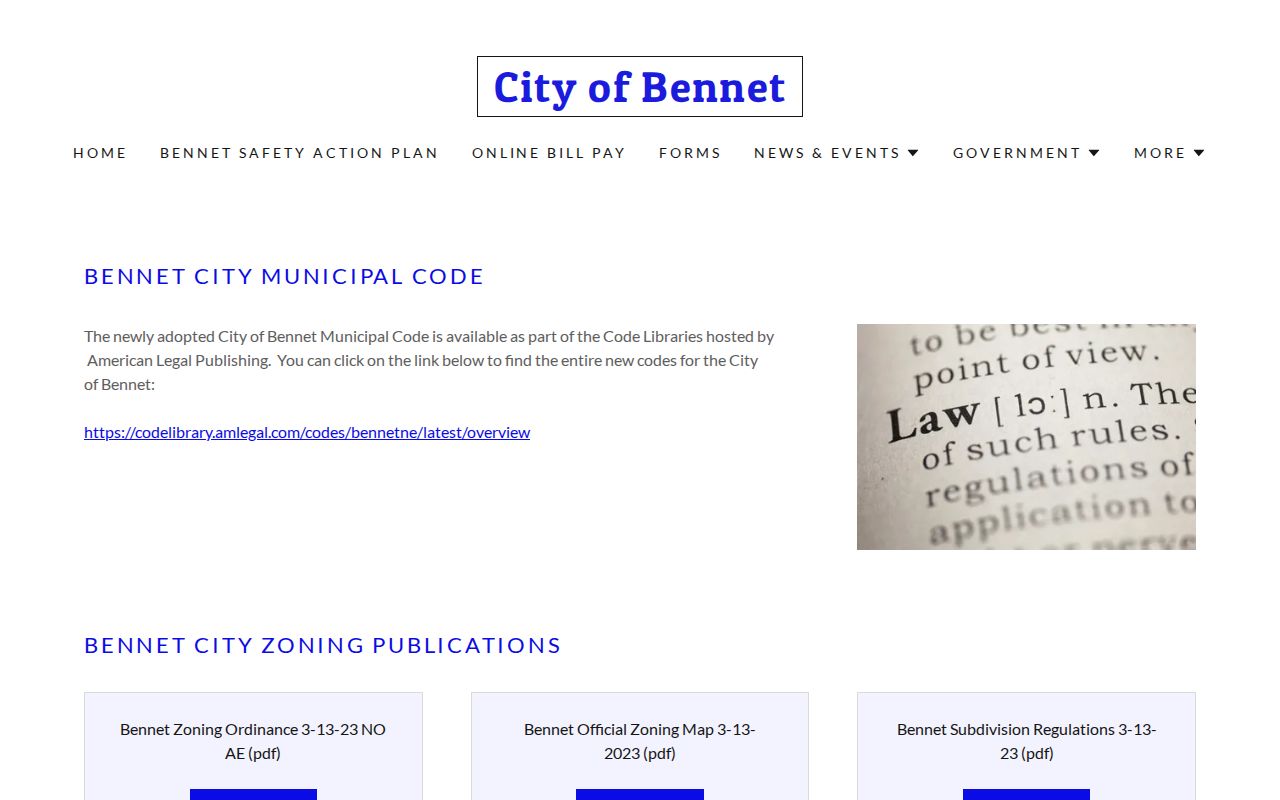
The Bennet code page supports ordinance research. A filed court record must be tracked down through the court named on the citation.
- Bennet municipal code
- The local ordinance source and City Hall route for Bennet code questions.
- Register of Actions
- The chronological court record of a filed Bennet-related case, including settings and orders when available.
Bennet Traffic Tickets
Read a Bennet traffic citation closely. Check its waiver and court instructions before searching or paying anything. The Nebraska Judicial Branch's traffic guidance explains the rule. The waiver information on the citation decides whether an appearance is required. If the Bennet ticket lands in County Court, rely on the official case details. Do not assume the village name identifies the docket. The state court payment portal works from the citation and court case fields. Match each one to your Bennet paper before continuing. Once the citation is identified, the Lancaster County traffic court records page adds countywide context.
| Payment or search field | How a Bennet ticket uses it |
|---|---|
| County | Select Lancaster County when that is the court named on the citation. |
| Court choice | Use the County or District selection printed for the case, not Bennet as a court name. |
| Case type | Use the traffic or criminal type indicated on the Bennet citation. |
| Year and case number | Enter the two-digit year and exact case number from the court paperwork. |
Bennet Case Type Comes Before City Name
Case type comes first for a Bennet docket question, not the village name. On JUSTICE, a nontraffic civil search narrows by Lancaster County, year, and civil subtype. County Court shares civil jurisdiction with District Court up to $70,000. Bigger civil claims, equity, domestic relations, and other District Court matters take their own route. Bennet adds no sixth trial-court system. It cannot change which court a case type selects.
A broad Bennet name search can flood you with more than 30 results. Add court, type, year, or judge first. The one-time JUSTICE service may charge even when nothing turns up. Narrowing first saves the fee. A missing Bennet result also has innocent explanations. It could be a recent filing, the wrong court, a name variation, or an access restriction. It never proves that no court case exists.
Where Bennet Cases End Up
Where does a Bennet ordinance or traffic matter land? Usually Lancaster County Court. That court handles municipal ordinance violations, misdemeanors, traffic matters, and small claims. Probate, adoption, and felony preliminary proceedings land there too. Nebraska Revised Statute §25-2703 even allows this. A city or village attorney may sign and prosecute a complaint there. So the village where conduct occurred does not create a separate Bennet court system.
Docket flow: Bennet Municipal Court → Lancaster County Courts → District Court
Treat this routing as a way to aim a Bennet question. It is not proof of a standalone municipal court. The record controls. Whatever court the filing names is where the case lives. County Court cases run through JUSTICE. A District Court record or certified-copy question goes to the District Clerk. Bennet City Hall stays the right door for local code and city-government questions.
Bennet Certified Court Record Details
Skip the vague request for a "Bennet file." A county office needs real identifiers. List the County Court case number, the exact document or order, the year, the case type, and the full party name. For a Bennet court record by phone, County Court criminal and traffic questions use 402-441-8959. Civil and small claims use 402-441-7271. Probate, adoption, and condemnation use 402-441-7443, and the general office is 402-441-7291. Any of those divisions can confirm the correct copy route.
District Court is different. The District Court Clerk records request form shows the pattern. Name the case and the document. Pick a delivery method, and say whether you need certification. A certified copy means the clerk authenticates a specific document. It is not a generic web printout.
Public Access to Bennet Court Records
Once a Bennet-related filing sits in a court file, Nebraska court-access rules govern it. Public electronic fields can include party indexes and case summaries. Registers of Actions, calendars, and public images may appear where available. A clerk terminal may offer public information. An image may not be reachable remotely. Sealed, redacted, juvenile, and other restricted material stays under the controlling rule or court order.
Public-record rules:
Nebraska Court Rules, Article 8 identifies public electronic court fields and preserves the rules for access exceptions.
Nebraska Court Rule §2-215 permits public inspection of court filings unless another law, rule, or order limits access.
Nebraska Revised Statute §84-712 addresses examination and copying of public records, subject to statutory exceptions.
Bennet’s hosted code library is a code source, not a case register.
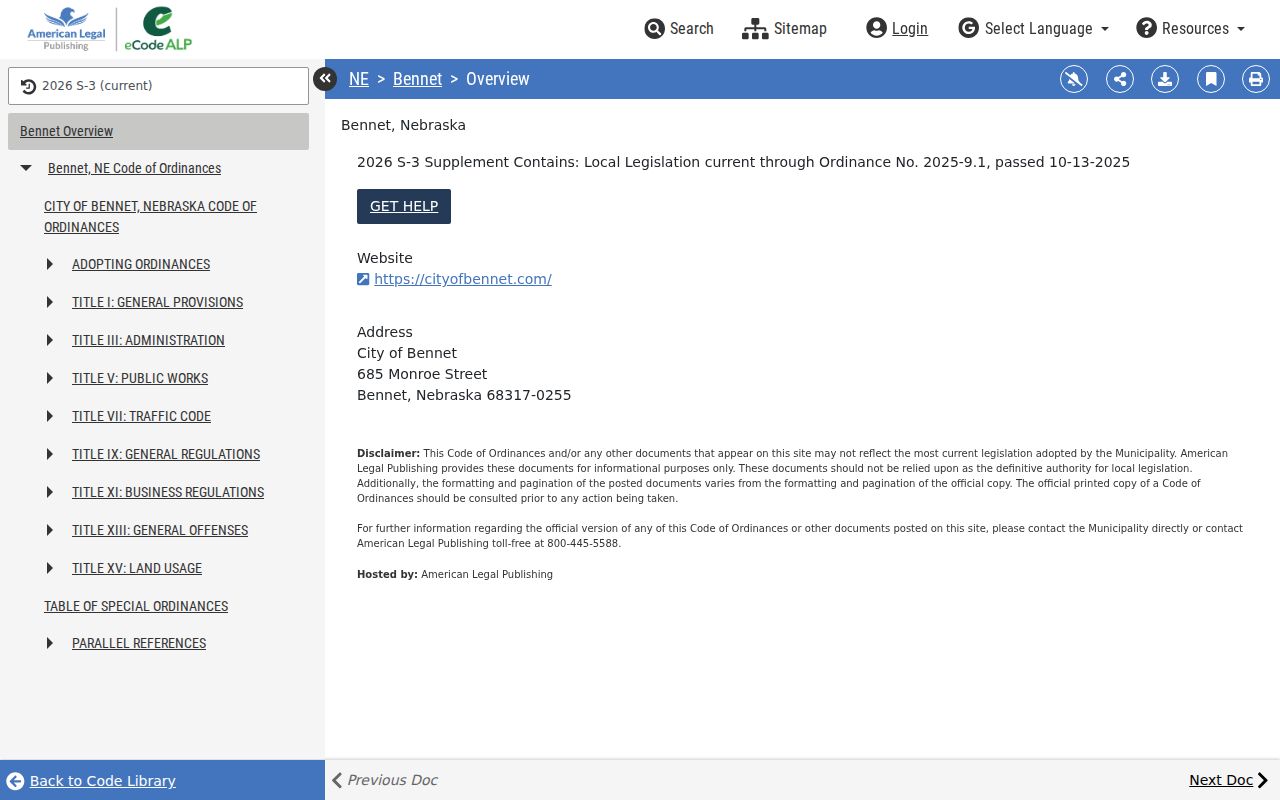
For any Bennet court record, confirm which court holds it. Then request the identified public document or a certified copy from that clerk.
Bennet Record Requests Need Court Identifiers
No village-level register exists. So route a Bennet records request with court identifiers instead. Nebraska's court records-search policy is clear. A clerk search works best with a complete party name, the case year, and the case type. Add the case number when you have it. Name the particular order, pleading, or document you want. That gives the clerk enough to locate the court record. The Bennet municipal-code source simply supplies no public register.
A Bennet search result may still leave gaps. JUSTICE's one-time service can show a case summary and Register of Actions while a document image stays unavailable. When that happens, take the request for the specific Bennet-related order to the holding court's clerk. The gap is not a verdict on the filing itself. Several things can shape what appears online. A recent filing, a court selection error, the 30-result cap, image availability, or an access restriction can each play a part.
Work the route in order. Start with the citation or known party. Pick the actual County or District Court, narrow by year and type, and keep the complete case number. When the online result falls short, request the identified record from the clerk. That approach respects the separate roles of Bennet City Hall, the municipal-code library, County Court, and District Court. It never pretends a village-level court database exists.